
When an idea is ripe
I recently had the opportunity to meet Peter Zumthor in Los Angeles. Some good friends had invited us to an event surrounding the opening of his new building for LACMA. His books have been a source of inspiration for years so meeting him was particularly special.
My interest in Swiss architecture had grown partly through a friend's enthusiasm for the sculptor Hans Josephsohn and his close relationship with architect Peter Märkli. Märkli designed La Congiunta in Switzerland as a dedicated space for Josephsohn's sculptures. It is an extraordinary example of architecture creating the conditions for art to be experienced without competing for attention.
But what has always intrigued me most about Zumthor is his process. Particularly the idea that a project needs time to become ripe.
I keep returning to that expression because it suggests something fundamentally different about how creative work develops.
We tend to think of ideas as things we produce. We brainstorm them and develop them before presenting and eventually delivering them. We establish a schedule often before we know what the idea might become and organize the work around it.
There are good reasons for this. Buildings need budgets and projects have deadlines. People need to know when something will be finished. But beneath these practical necessities sits a less practical assumption that the time an idea needs to become good will somehow correspond to the time we have allocated for it.
A deadline can tell us when something needs to be finished. It cannot tell us when something is good.
The danger of acceptable work
An idea can move through an entire process without ever becoming convincing. It can be polished and made presentable. Every milestone can be met and every decision approved. The work can be delivered on schedule without anyone having to confront whether the idea was worth making in the first place.
Nothing has gone wrong exactly. Except that the idea never became what it might have been.
This is perhaps the most uncomfortable implication of Zumthor's thinking. Finishing an idea too early does not necessarily produce something bad. It may produce something perfectly acceptable. Bad work gives us something to object to while acceptable work gives everyone permission to move on.
We have become exceptionally good at organizing the production of things. We can measure progress and manage resources while coordinating complicated processes and predicting when something will be completed. What remains remarkably difficult to measure is whether the thing itself is becoming better.
An afternoon spent questioning an assumption may be more valuable than a week spent developing it. A conversation might reveal that the entire premise is wrong. Sometimes the most important progress happens when very little appears to be happening.
From the outside this can look like hesitation. From inside the work it may be the first meaningful progress in days. The problem is that these moments rarely fit neatly into a schedule.
What is a practice for?
Zumthor's approach to architecture seems inseparable from how he has chosen to live and work.
Rather than building an enormous international architecture firm he has maintained a relatively small practice in Haldenstein in Switzerland. His studio and home are closely connected and he has remained personally involved in the work throughout his career.
His reputation could presumably support a much larger operation with more offices and more commissions. Yet his practice has remained comparatively modest in scale.
The practice exists to make the work possible. The work does not exist to make the practice bigger.
We tend to understand success through expansion. More clients lead to more employees and more projects. Growth becomes evidence that something is working and eventually an obligation in itself. But growth also changes the conditions under which work is made.
A larger operation requires predictability. Projects must arrive and decisions must be made. Resources must be allocated and work must move forward. The structure gradually develops needs of its own.
At some point the organization can begin to demand precisely what the work resists. Predictable output and repeatable methods become increasingly important while the space for uncertainty becomes smaller.
What is the purpose of building a successful practice if success eventually prevents you from working in the way that made the work valuable?
I don't think the answer is necessarily to remain small. There are extraordinary things that can only be accomplished through large organizations and collective effort. Nor does a small studio automatically produce more thoughtful work.
But Zumthor's example raises an interesting question about what we choose to optimize for. Is the structure designed to support the work or has the work become responsible for supporting the structure?
The patience of architecture
Architecture operates on a different timescale from many other disciplines.
A building can take years to conceive and construct. Once completed it may remain for generations. The people who commissioned it and built it may be long gone while the building continues to shape the lives of those who encounter it.
When something might stand for a hundred years what difference does another month make?
Of course the answer is that it can make a considerable difference to the people paying for it. Construction schedules and financing are real considerations. But the question is still worth asking because we often treat time as a cost to be minimized rather than a material to be worked with.
Architecture makes this tension especially visible because its consequences are so enduring. A decision made to save a few weeks may remain embedded in a building for decades.
Zumthor's work seems particularly conscious of this responsibility. His buildings are deeply concerned with how materials age and how light changes throughout the day. They consider how spaces are experienced and how a place might feel long after its construction.
These are not qualities that can be fully resolved through a presentation or a drawing. They require observation and experience along with the willingness to reconsider.
Time is not simply something the project consumes. It becomes part of how the project is understood.
Patience is not enough
There is an obvious problem with romanticizing this approach because time does not guarantee quality.
An idea can spend months going nowhere. A designer can mistake indecision for depth. The claim that something isn't ready can become a convenient way of avoiding criticism or commitment.
Patience is also not free. Someone pays for the additional time and someone waits for a decision. So the argument cannot simply be that good work takes longer. It has to be that we become better at understanding what additional time is for.
What remains unresolved? What are we trying to discover? Are we testing an idea or merely postponing the moment when it must be tested?
An idea does not become ripe simply by being left alone. It develops through attention and through the continuous process of making and questioning. Sometimes it requires distance and sometimes it requires an entirely different approach. Occasionally it requires recognizing that the idea was never particularly good to begin with.
This is where patience becomes something more demanding than waiting. It requires judgment and the ability to understand what we are waiting for.
The authority of the idea
I don't believe every project needs years of consideration. Some ideas arrive almost fully formed while others benefit enormously from urgency. A deadline can force a clarity that another month of exploration might only obscure.
Constraints can be productive and sometimes they are essential. But there is a difference between using time as a constraint and allowing the schedule to become the authority over an idea.
The first can strengthen the work while the second can quietly diminish it.
Perhaps what interests me most about Zumthor's approach is the suggestion that the idea itself should have some authority over the process. We should remain responsive to what we discover rather than simply executing what we originally planned.
This is difficult because it introduces uncertainty into a world that is organized around reducing it. We want to know when something will be finished and what it will cost. We want reassurance that the process is moving in the right direction.
But an idea worth pursuing may change our understanding of what the right direction is.
Sometimes the work needs another day and sometimes another day will change nothing. Sometimes the idea needs to be abandoned rather than developed. None of those decisions can be made by the calendar alone.
This is why Zumthor's expression has stayed with me. An idea becoming ripe suggests that creativity is not entirely an act of control. Making something involves listening as much as directing and the process has to accommodate discoveries we could not have anticipated when we began.
We often talk about protecting ideas from budgets and expectations. Less often do we talk about protecting them from our own desire to be done.
There is relief in finishing because the uncertainty ends and the decisions are made. The work leaves the studio and everyone can move on. But relief is not the same as conviction.
The responsibility of someone making something is not only to finish the work. It is to recognize when it is ready and when it is not to understand what still needs to change.
An idea should not be considered good simply because we have run out of time.

Soup of responsibilities
Apparently, I'm in the top one percent of Cursor users in Los Angeles. I'm not sure what that says about me. Probably that I should get out more. Or maybe it was just a really good email campaign.
I've spent most of my career as a creative director, but I've always been an entrepreneur. Lately, I've become completely obsessed with building software. I don't particularly like the term vibe coding. It makes the whole thing sound so nonchalant. I care about what I'm making.
And what I love isn't just the coding. It's the whole thing. Finding an opportunity, developing the idea, building the product, figuring out the business, the marketing, the sales. All of it. For the first time, I can take an idea remarkably far without needing an entire team behind me. It's an incredibly empowering feeling.
A friend recently invited me to a creative leadership retreat organized by Design Better. It brought together people who have spent much of their careers making things, leading teams, and building creative departments. One observation kept coming up: everyone seems to be doing more with less. Not necessarily better work, just more of it.
I found this interesting because I've been experiencing almost the opposite. The same technology that's making some people's working lives more demanding is making mine considerably more exciting. Organizations seem particularly interested in what AI can help people produce, while I've become much more interested in what it allows people to become capable of. Those are two different ways of looking at the same technology.
For much of my career, making something ambitious meant bringing together people with different specializations. Designers, writers, developers, strategists, producers. Each contributed something the others couldn't necessarily do themselves. That division of expertise made sense, and it still does in many ways. But it also meant that what an individual could imagine and what they could actually make were often separated by considerable resources.
Now that distance is getting shorter. And I wonder what happens to creative people when the boundaries between their disciplines begin to dissolve.
The future of product design
I think product and interactive design will feel the consequences before most other creative disciplines.
For years, the time and resources required to build software created a natural limit on how quickly product design could move. Research cycles, roadmaps, months of development. You could spend weeks exploring a problem because building the solution might take months. That relationship is changing. Product managers can build features, developers can design interfaces, and designers can ship working software. Small teams can make things that previously required entire departments.
Of course, building something is not the same as maintaining it. More software creates more work, and removing one bottleneck often reveals another. But something more interesting is happening than simply making the production process faster. The people involved are becoming capable of doing things that previously belonged to someone else's discipline.
A designer who can build a working product doesn't have to stop at describing an interaction. They can experience it, change it, and discover things that might never have emerged from a static design. A developer who can explore visual directions independently might begin thinking about the product differently. A product manager who can prototype an idea might discover that the original problem wasn't quite what they thought it was.
The tools aren't necessarily making everyone an expert in everything. They're allowing more people to participate in parts of the creative process that were previously inaccessible to them. And I think that changes what people imagine in the first place.
There's also a prediction I find particularly interesting. Product design and digital teams might start looking a lot more like the project-based creative teams we know from advertising and entertainment. Smaller groups assembling around an idea, shorter production cycles, specialists brought in when they're needed. Less time maintaining processes around the work and more time actually making something.
There's some irony in that. Product design spent years distinguishing itself from advertising, only to potentially borrow parts of its working model. COVID normalized distributed teams, AI is making smaller groups considerably more capable, and the boundaries between disciplines are becoming harder to defend.
For years, we've invented increasingly specific titles to describe increasingly specific responsibilities. Now those responsibilities are beginning to overlap. I'm not suggesting everyone will suddenly become good at everything. Expertise still matters, and the difference between something that works and something that's genuinely good can be enormous. But the distance between disciplines is shrinking, and some of the boundaries we've built around them are starting to feel rather arbitrary.
Which raises another question. What happens when making a product becomes something almost anyone can attempt?
The future of brand creative
I think something equally interesting is happening from the other direction.
In many organizations, brand creative is still largely concerned with how a business presents itself. The identity, the campaigns, the communication. Important work, but often arriving after many of the fundamental business decisions have already been made. The product exists, the strategy has been decided, and the business has established what it wants to achieve. The creative team is then asked to make people care.
But what happens when the people responsible for communicating an idea become capable of building it themselves?
I've spent years working between brand and product, and one of the most interesting things about building software has been discovering how closely the two are connected. When you're responsible for the whole thing, you can't really separate the product from the way it's presented. The experience, the positioning, the business model, and the way people discover it all begin influencing one another.
A decision about how something works might change how you describe it. A thought about who might use it could change what you decide to build. An idea that begins as a piece of communication might turn out to be a product. These aren't necessarily separate creative problems. We've just become accustomed to assigning them to different people.
And as making things becomes easier, I suspect that relationship will become increasingly important. We're going to end up with considerably more products, more features, more images, and more companies making remarkably similar things. Just because something exists doesn't mean anyone will care.
The ability to make something is becoming more accessible. The ability to recognize what is worth making remains a much more difficult question. And that's where I see an interesting opportunity for brand creatives. Not simply to become better at marketing what already exists, but to participate in deciding what should exist in the first place.
That requires curiosity about disciplines that have traditionally existed outside the creative department. Strategy, technology, distribution, sales, and the economics of making something sustainable. Not because every creative person needs to become an expert in all of them, but because understanding more of the whole can change the quality of the contribution they make.
A creative director who understands how to build a product might approach a brief differently. A designer who understands distribution might make different decisions about an experience. Someone who understands the business might recognize an opportunity that would otherwise never become a creative project.
The interesting part isn't that these people can suddenly do more jobs. It's that their ideas are no longer confined quite so neatly to the responsibilities they were originally given.
A soup of responsibilities
For much of the last century, specialization has been one of the defining characteristics of creative work. We developed disciplines, departments, processes, and increasingly specific job titles. Each brought its own expertise, language, and way of thinking.
Specialization has given us extraordinary things. The depth of knowledge that comes from spending years mastering a craft isn't something I expect technology to replace. But specialization also creates boundaries. A designer might have a brilliant idea for a product but lack the ability to build it. A developer might recognize an opportunity for a new experience but not feel equipped to design it. A creative director might see an entirely new business but have no practical way of getting it off the ground.
Of course, people have always crossed these boundaries. But doing so often required considerable time, money, or the participation of other specialists. What's changing is the amount of permission an individual needs to begin.
You can explore an idea before assembling a team. You can test something before asking for a budget. You can build a working version of something that previously might have remained a presentation. And perhaps most importantly, you can learn through making.
I think that's an underappreciated part of what's happening. When the ability to execute an idea becomes more accessible, the creative process itself begins to change. You discover things by trying them, encounter problems you wouldn't have anticipated, and develop an understanding of disciplines that you previously only experienced through collaboration.
That doesn't necessarily make you a better developer, designer, or strategist. But it might make you a more capable creative person. Someone who can connect more things, recognize more possibilities, and carry an idea further before needing someone else to take over.
And I wonder what happens when enough people begin working this way.
The boundaries between disciplines don't disappear entirely. They become more permeable. Expertise remains valuable, but it no longer determines quite so rigidly where someone is allowed to contribute. The designer can build, the developer can design, the strategist can experiment, and the creative director can take an idea all the way to market. The roles start turning into a soup.
That creates an interesting challenge for the organizations we've spent decades building around those roles. Most creative departments are still organized around fairly distinct responsibilities. People develop ideas, pass them to other people, wait for decisions, and eventually hand the work to someone responsible for getting it into the world.
There are good reasons for some of those divisions. Accountability matters, expertise matters, and someone still needs to make decisions. But when individuals become capable of contributing across more of the process, the handoffs themselves begin to look different.
Perhaps the question isn't how many responsibilities one person can take on. It's how much more ambitious the work can become when people understand and contribute to more of it.
I'd like to see organizations built around that possibility. Smaller teams with broader ownership, specialists who can go deep, generalists who can connect things, and people who feel responsible for the idea rather than simply their assigned part of it. Technology used to give people more room to think, experiment, and make things, rather than simply asking them to produce twice as much.
The opportunity isn't to replace teams with individuals. It's to give individuals more capability, and teams more ambition.
I've spent much of my career surrounded by extraordinarily talented people. One of the great pleasures of creative work is seeing what happens when different perspectives come together around an idea. I don't think that changes. What changes is what each person can bring into the room.
I can take an idea a long way on my own now. That's been a thrill. But what I'm actually excited about is what happens when that capability exists alongside other people with entirely different experiences, interests, and ways of thinking.
For a long time, the question was whether you had the resources to make something. Increasingly, the question might be whether you have something worth making. And when more people have the ability to turn their ideas into reality, I suspect we'll discover just how much creative potential has been sitting behind the boundaries of specialization.
What I do know is that I'm having more fun making things than I've had in years. I have a feeling the next few years are going to be a complete mess, and I can't remember the last time I was this excited about it.

There is no blueprint for the in-house agency
The first generation of in-housing was relatively easy to explain. Companies wanted more control, greater speed, closer access to the business and, often, lower costs. Work that had traditionally been handed to agencies began moving inside.
The logic made sense. If the work was constant, why keep renting the capability? Build a team closer to the people making the decisions. Give them direct access to the business, the product and the people shaping both.
So companies built internal agencies. And because agencies were the model everyone knew, many of those teams were structured like agencies too. Creative directors, designers, writers, producers and strategists. Similar departments. Similar processes. Similar ways of working.
When there is no established model, experience has a way of becoming the model.
At first, that worked. The physical distance disappeared. The organizational distance could remain.
But proximity began producing something that was harder to anticipate: knowledge.
Not knowledge in the abstract. The accumulated understanding that comes from being there every day. Why a decision was made six months ago. Which constraint is real and which is inherited. What the product team is worried about. What customers keep misunderstanding. Where the business is going before it becomes a brief.
Over time, that knowledge changes what an internal creative capability can be useful for.
A designer who begins by making campaigns eventually understands the product well enough to influence how it is presented. A writer who starts with advertising develops a feel for the language of the company itself. A creative team that was built to respond to briefs begins seeing problems before anyone has written one.
This is where the agency analogy starts to break down.
An external agency is designed around a relationship between two organizations. There is a client and there is an agency. A brief crosses the distance between them. The agency responds.
Inside a company, that distance is artificial.
The people making the work may sit next to the people making the product. They may be in the same meetings, see the same research and hear the same arguments. They accumulate context simply by being there.
Yet many internal teams continue to operate as though that distance still exists. The business creates the brief. The creative organization receives it. One side decides what the problem is. The other is asked to solve it.
The physical distance disappeared. The organizational distance returned.
That can work. Sometimes it is exactly what the business needs. But it is not the only model.
The interesting thing about mature in-house organizations is that they rarely evolve in exactly the same direction.
In a product company, creative capability might move closer to product development. In an entertainment company, it might become part of how stories are packaged and introduced to the world. In a design-led company, it may influence the product itself. In a large global business, its greatest value might be creating coherence across thousands of expressions.
There is no universal destination because there is no universal business.
Organizations reveal the value of a capability through use.
That is difficult to design on an org chart in advance. You can decide what work to bring inside. You can hire people and define roles. You can establish processes and reporting lines. What is harder to predict is where those people will become useful once they understand the business.
A team built for one purpose begins solving another kind of problem. Someone hired for a narrow discipline develops knowledge that makes them valuable somewhere else. A capability that originally sat downstream starts being invited upstream because the people inside it have accumulated enough context to contribute earlier.
This does not mean every internal agency should become a strategic organization. It does not mean creative should sit at the center of every company. And it does not mean the agency model was a mistake.
The agency model was useful because it gave companies somewhere to begin.
But a starting model should not become a permanent definition.
The first generation of in-housing was about deciding what to bring inside. What happened next was harder to plan. Knowledge accumulated, people became useful in unexpected places, and the business began revealing what the capability was actually worth.
The challenge now is less about building an in-house agency and more about noticing what it has become.
Before deciding how to structure an in-house creative organization, I'd want to understand where its expertise actually lives.
Not just what departments are called or who reports to whom, but what people are genuinely good at. I'd look at past projects, follow how ideas move through the organization, and talk to the people doing the work. Where does each team contribute something unique? Where are responsibilities overlapping? And where is expertise being brought in too late?
The goal wouldn't be to make everyone interchangeable. Quite the opposite. I'd want to preserve deep expertise while creating more opportunities for people to work across disciplines.
The structure should follow the talent and the work, rather than asking the talent and the work to fit an inherited structure.
Where time becomes art
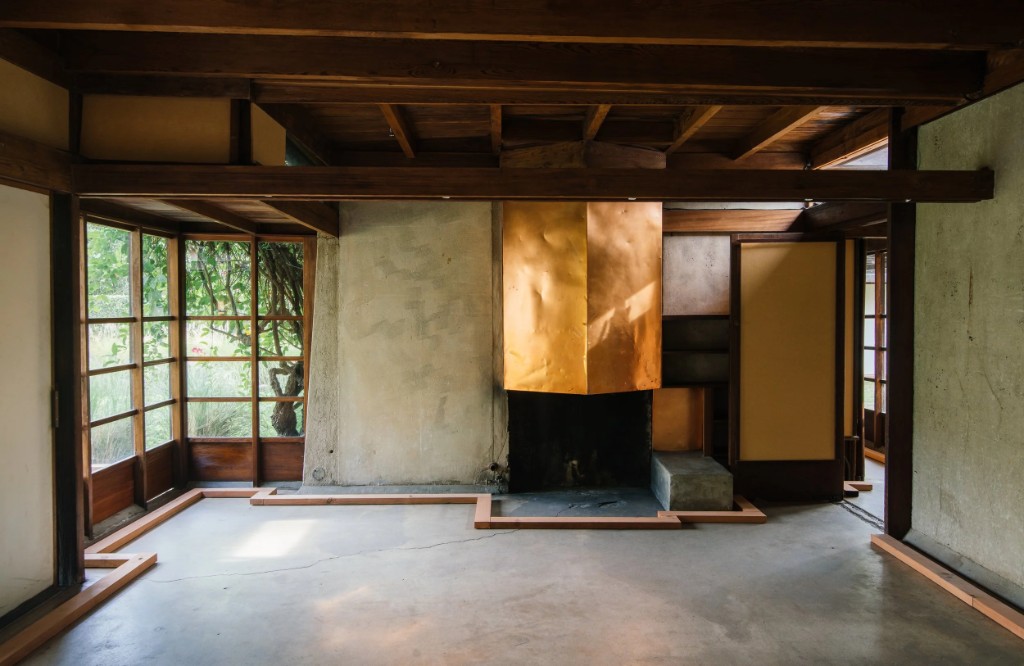
At the Schindler House in my neighborhood, the copper around a fireplace has handprints on it. Most of the metal has darkened, but the places people touched have changed differently.
A fireplace is not an obvious thing to touch. I imagine someone reaching out to feel the copper, then someone else doing the same years later. You cannot tell whose hands they were. You can tell they were there.
I find it more beautiful than polished copper. Nobody arranged the handprints. Someone chose a material that could keep them.
I began thinking about this through Artempo: Where Time Becomes Art, the book accompanying an exhibition conceived by Axel Vervoordt and Mattijs Visser. At the Palazzo Fortuny, objects and artworks from different centuries were brought together to consider what time does to them. Among them were a weathered ancient face and an old vase repaired many times. The exhibition made room for loss and damage, but also for the possibility that time creates.
That last possibility interests me as a designer. Time will act on almost everything we make. Choosing a material means choosing how it might respond.
Before use
A kitchen is photographed before anyone cooks in it. A car is shown before it has been driven. A phone is presented before anyone has held it. We pay extraordinary attention to this first state. It is the easiest moment to control, and the moment when the object must persuade someone to buy it.
Then the object begins doing what it was made for. We know these things will happen, yet we continue to measure their appearance against the image taken before they did.
There are good reasons to protect them. A kitchen must be cleanable, a car must remain safe, and a phone needs a screen we can read. Time can take away far more than it gives. But we already know how to distinguish damage from character in a wooden table or a bronze handle. Why do we so rarely ask what the materials in cars and technology could gain from years of contact? Few objects spend more time with us.
After the designer
Rutherford Chang collected used copies of the Beatles' White Album. Richard Hamilton's nearly blank sleeve showed every stain, inscription and crease. In Chang's We Buy White Albums, the same cover appears hundreds of different ways.
One stained sleeve might be dismissed as a damaged copy. Together, the records show what happened after an identical design entered hundreds of lives. Hamilton made the cover. Each owner made a version of it that could not be bought new.
The handprints at Schindler House work in much the same way. Neither Hamilton nor the person who chose the copper could determine what people would leave behind. They made something capable of receiving it.
What if we began a brief at the other end of an object's life? Picture the kitchen after ten years of cooking, the car after a hundred thousand miles, the phone after thousands of days in someone's hand. Which parts must stay clear and sound? Which materials might become more beautiful?
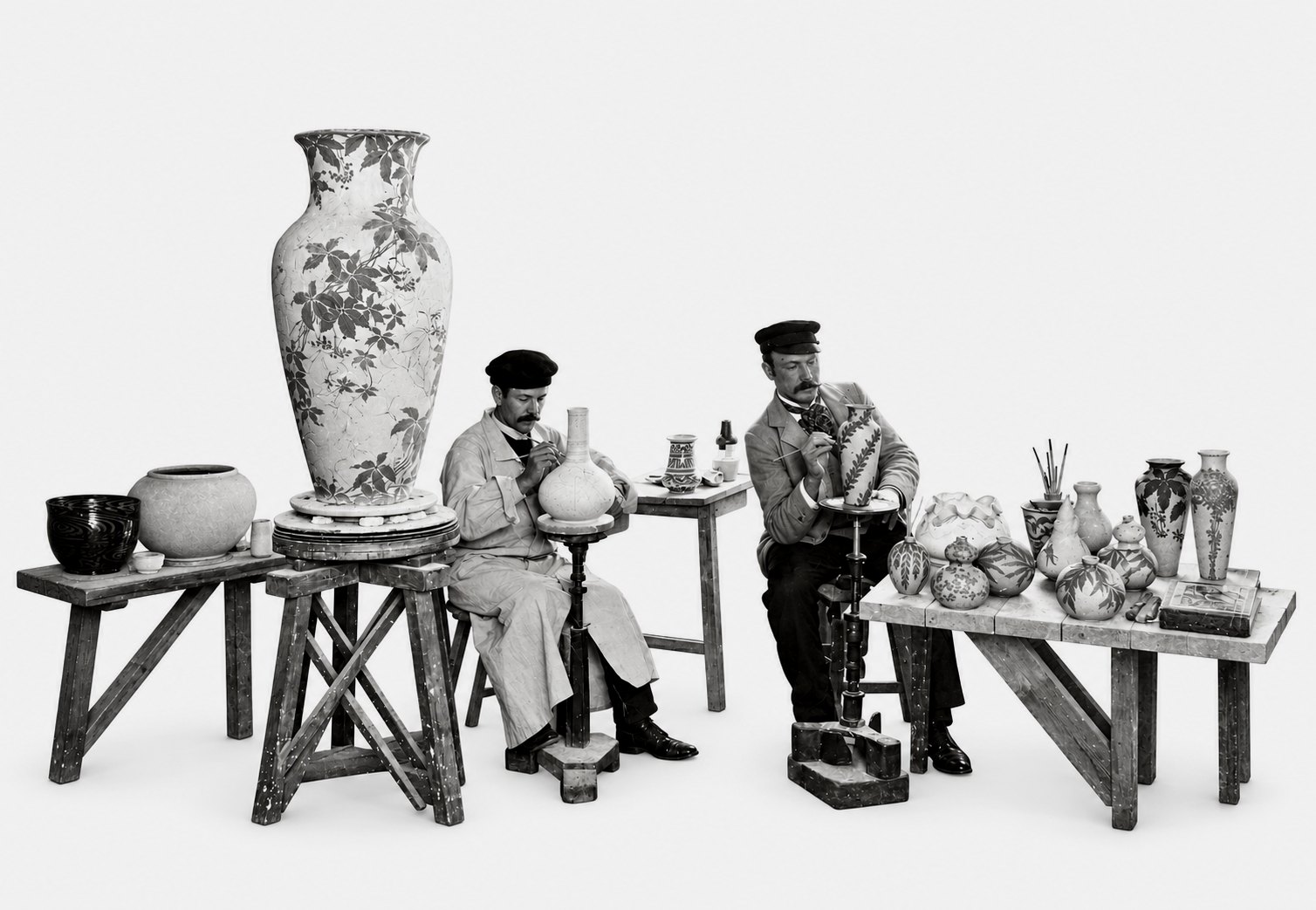
Svensk Form represents a version of design that now feels almost radical.
Sweden did not wait for an object to be finished before asking someone creative to make it desirable. Artists entered production early enough to change the object itself.
They worked inside porcelain factories, glassworks, textile mills and furniture companies. Some eventually became artistic directors, with influence over materials, techniques and what entered production. They did not merely communicate the value of industry. They helped decide what industry should make.
Artists to industry
This was not simply a government program, although the Swedish state later became an important participant.
The movement grew from Svenska Slöjdföreningen, the organization now called Svensk Form. Founded in 1845, it supported the drawing school that became Konstfack and worked to improve the quality of Swedish production.
In 1914, the organization formalized an unusually direct proposition:
The problem was industrialization. Mass production could make more objects for more people, but manufacturers were producing goods considered ugly, impractical and poorly adapted to modern life.
The proposed solution was not to retreat into craft. It was to place artistic experience inside the machine.
At Orrefors, the painters Simon Gate and Edward Hald began working directly with glassblowers and cutters. Their collaborations helped develop new approaches to engraving and established the glassworks internationally. Hald had trained as a painter. Inside the factory, painting became glass.
Beauty was a public question
In 1919, Gregor Paulsson published Vackrare vardagsvara: more beautiful everyday goods.
Paulsson argued that well-designed household objects should not be reserved for wealthy people. Industry could distribute quality at scale, but only if artistic judgment entered industrial production.
Design was therefore attached to a social project. A glass, chair or dinner service was part of the material environment in which ordinary life occurred. Improving those objects could improve life itself.
This was not uniquely Swedish. Britain had the Arts and Crafts movement and later founded the Council of Industrial Design. Germany’s Werkbund also connected artists, architects and manufacturers. Paulsson was directly influenced by German design reform.
Sweden’s distinction was not the idea itself, but the system built around it. Design education, manufacturers, exhibitions, museums, consumer organizations and eventually the welfare state reinforced one another. Design became industrial competitiveness, cultural education and social infrastructure at once.
No single institution produced this result. A network created the conditions for manufacturers to believe that artists belonged inside industry.
The problem with good taste
Vackrare vardagsvara assumed that trained cultural authorities could determine what constituted a better life. The 1917 exhibition was praised for addressing ordinary households, but it was also criticized for misunderstanding how working families actually lived. Airy rooms looked progressive in an exhibition. They were less useful to families who needed every room for sleeping.
Design for everyone can quickly become taste imposed on everyone.
The movement also produced a marketable idea of Swedishness: rational, restrained, functional and morally good. The history is messier than the objects suggest. Factories still depended on labor, sales and export markets. Artistic directors did not eliminate commercial interests. They negotiated with them.
But the tension is precisely what makes the model useful now. The system did not eliminate the conflict between design, commerce and social ambition. It gave that conflict somewhere productive to occur.
Design now enters late
Most contemporary companies value design. What differs is where they place it.
In one model, the business opportunity, technology and operational system are established first. Design makes the resulting product understandable, coherent and desirable.
In another, creative judgment participates earlier, while the product and the systems behind it are still being defined.
Neither model makes design inherently better or worse. They simply give it different responsibilities and produce different possibilities.
Artists to Industry belonged firmly to the second model. Gate and Hald could not have changed Orrefors by selecting a typeface for its packaging. Their importance came from sustained proximity to materials, tools, technicians and manufacturing decisions.
They were inside the factory long enough to alter what the factory knew how to make.
The factory has changed
The contemporary equivalent of sending artists into industry is not giving an illustrator a desk inside a warehouse. It is placing creative judgment alongside engineering, operations, research, policy and business decisions while the system is still taking shape.
This is different from adding “design thinking” to a workshop. The Swedish factories did not invite artists to contribute a creative perspective and then return to their studios. They created positions, workshops and careers inside production.
The lesson from Svensk Form is not that every company needs better taste or that designers should make every decision. It is that the timing and location of creative judgment determine what it can change.
The contemporary equivalent of Artists in Industry is not bringing design closer to business. It is giving design a role in shaping the business itself.
Every format has constraints. But within those constraints, the tool determines which possibilities are close at hand.
For most of my career, I began a project by opening an application. That choice appeared operational, but it was already creative. The software implied the process because the process had been designed by the company that made it.
Photoshop established a shared approach to digital images through layers, masks, selections and filters. InDesign organized publishing around pages, frames and styles. After Effects organized motion around compositions and timelines.
These are not laws. They are product decisions that became creative conventions.
Now I begin with a different question: What would I make if the software had not already decided how?
Why am I opening Photoshop?
Indie software and custom tools are not new. Artists, designers and studios have always modified instruments, written scripts and commissioned software.
I have started building tools around particular projects. Each does less, but it knows more about the specific project: its materials, constraints and intended behavior.
Instead of adapting the project to the software, the project commissions its own tool.
Gerhard Richter
Gerhard Richter’s abstract paintings were partly made with large squeegees built to move paint across the canvas.
The tool was not a more efficient paintbrush. Its scale and movement produced a different relationship between intention and chance. Layers were added, dragged, obscured and unexpectedly exposed. Richter could establish the conditions, but he could not completely determine the image.
The instrument changed what the work could become.
The project commissions its own tool
Choosing software was once an operational decision. Now, for more creatives, designing the tool itself can become part of the creative direction.
What should be possible? Which constraints might produce a better result? Does the project require twenty panels or three buttons?
This does not mean every creative should build everything. Existing software remains essential for collaboration, reliability and scale.
Some tools will become products. Others may exist for one studio or one afternoon.
Custom software is usually sold as efficiency. Its more interesting potential is invention.
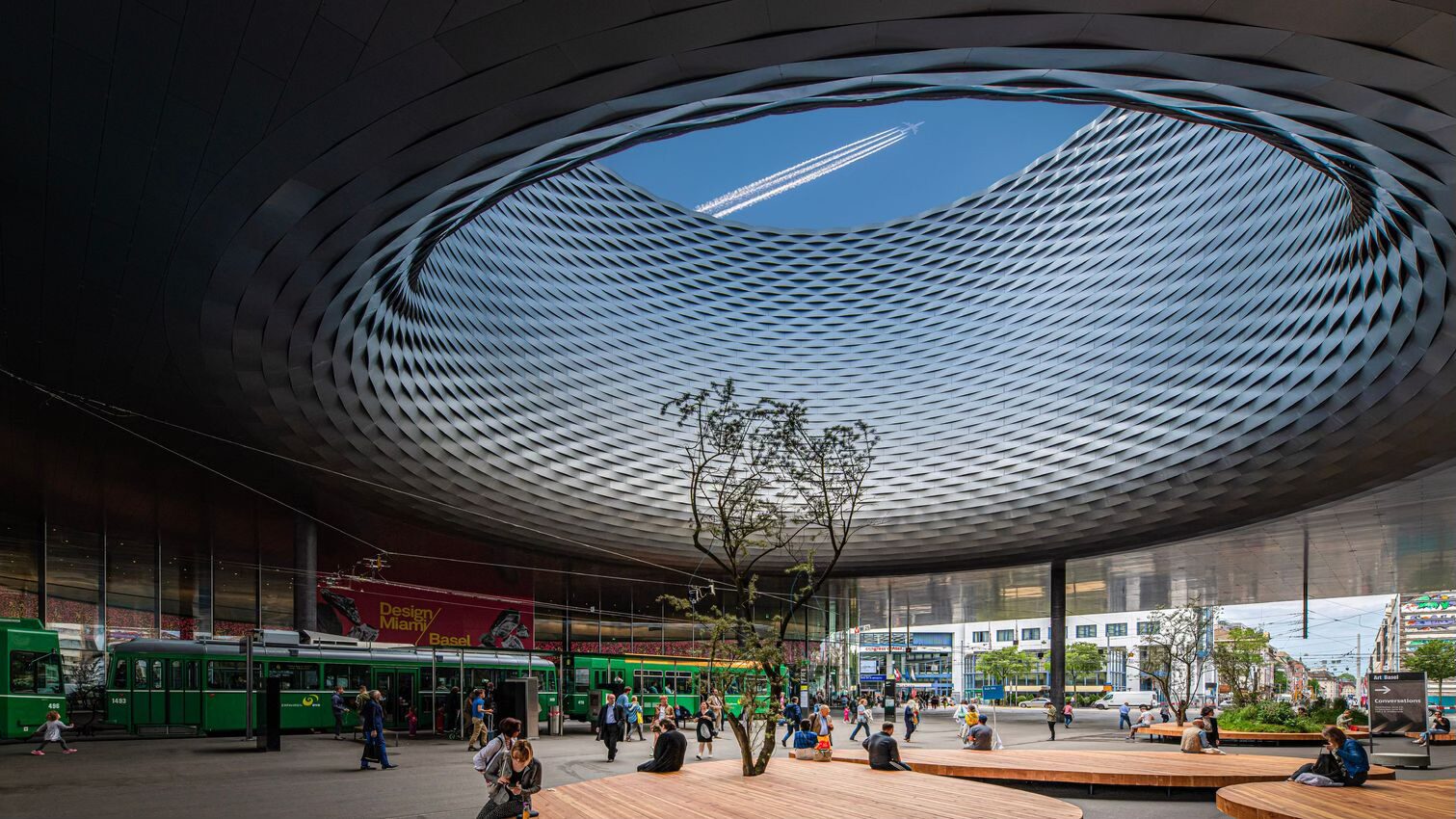
I traveled to Art Basel and Milano Design Week this year. Across both, the common thread was craft.
At Basel, the artist’s labor was often visible in the work. Fibers hung loose. Knots remained exposed. Materials looked accumulated, stressed, sorted or repaired. The object arrived with evidence of what had happened to it.
In Milano, brands expanded the same gesture into architecture. The workshop moved into the exhibition. Material libraries, prototypes, proprietary fabrics and demonstrations of technique occupied the foreground.
At Bottega Veneta, Kwangho Lee filled the Via Sant’Andrea store with leather cords woven alongside artisans from the house’s atelier. Stone Island presented one jacket in six dark-grey fabrics, then upholstered the furniture in those materials so visitors could sit on the difference.
The product was still there. But the process had become part of the product.
That made sense in the most literal way. Craft takes time. Time costs money. A difficult weave, a hand-finished surface or a material developed over years gives an object a history that can help explain its price.
This logic is especially familiar in luxury. The atelier becomes evidence that the object could not have appeared instantly.
But what I saw seemed to point toward something broader.
Much of the work in Milano was not handmade in opposition to industry. It came from brands with sophisticated factories, global supply chains and significant technical capacity. The attraction was not necessarily an escape from industrial production.
It was the opportunity to see production as a sequence of decisions.
A knot can do more than signal the hand. It shows where somebody chose to pull. A material library shows that alternatives were considered. A failed prototype proves that the finished object was not inevitable.
Proof of work
The phrase belongs to computing. Proof of work demonstrates that computational effort has been expended before a result is accepted. Here, it describes something less technical but increasingly important: visible evidence that human judgment occurred before the result appeared.
That evidence matters because results are becoming fast. The result may be impressive. It simply provides less evidence than it used to.
This may also explain why process is moving beyond galleries and exhibitions. Behind-the-scenes content is not new, but making is increasingly presented as the main event rather than supplementary material. Studio visits, material experiments, and “how it was made” films allow the audience to remain with the decisions instead of skipping directly to the reveal.
There is, of course, a risk of "Process theater".
The process shown by a brand is still a curated image. It can reveal experimentation, touch and transformation while editing out repetition, hierarchy, logistics and scale. The workshop can become scenography. Labor can become a texture applied to an otherwise ordinary product.
But that does not make every display of process false. A constructed presentation can still reveal something real: the intelligence inside a material, the years contained in a technique or the decision that changed the outcome.
The distinction is whether the process explains the work or merely makes the work look expensive.
Show the constraint that shaped the result. Preserve the version that failed. Name the person who solved the problem. Reveal the source, system or standard that made the final experience possible. Let people see where human judgment entered.
Process documentation does not have to remain backstage material released after the real work. It can establish authorship, create trust and distinguish one polished result from ten thousand others.
Craft may be everywhere because craft is still expensive. But it may also be everywhere because polish has become cheap.
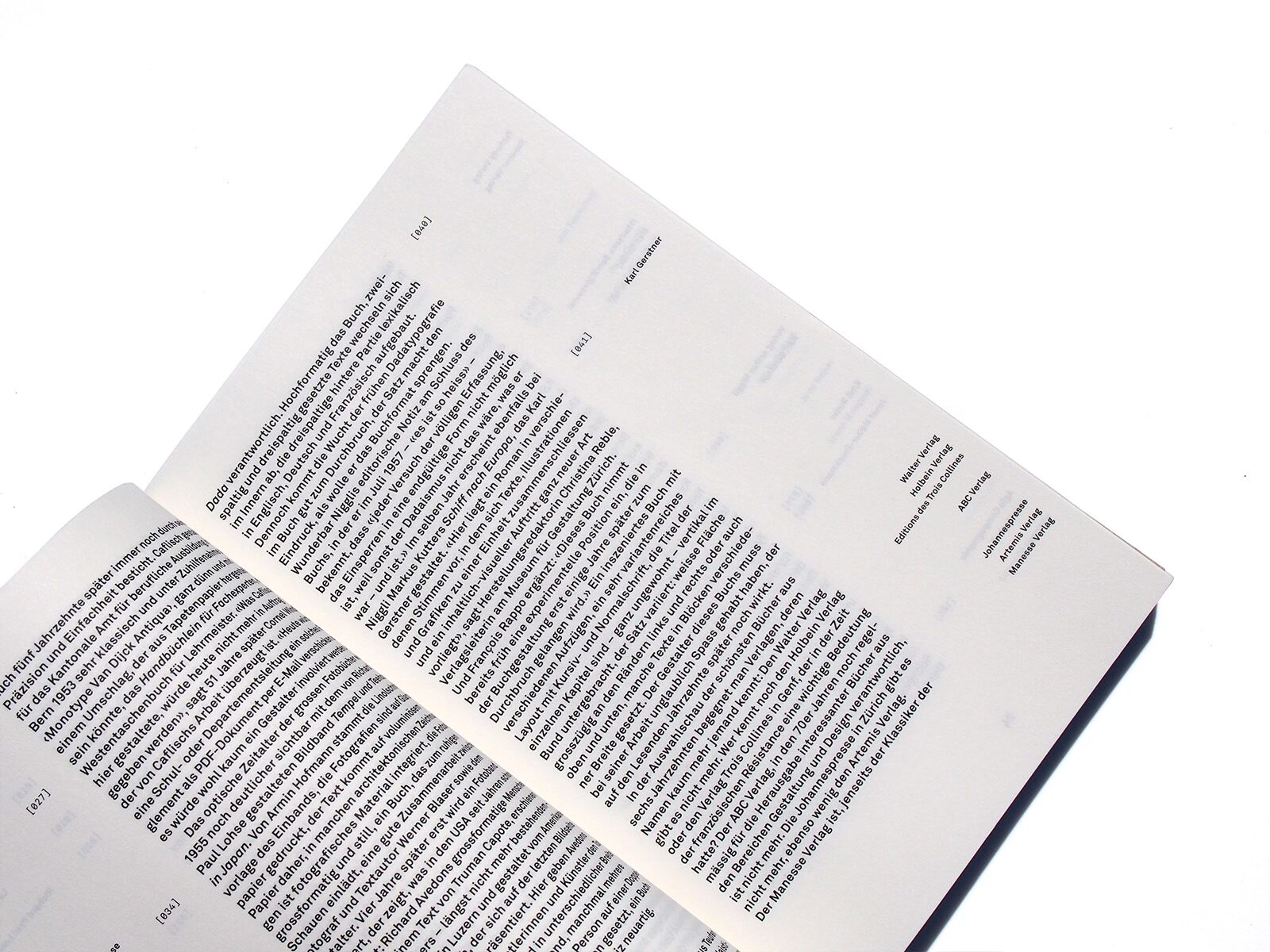
I fell in love with design through typography. But the part that continues to interest me most is typesetting: the set of decisions that determines how language occupies space and how it is read.
Typesetting was once a distinct stage of production, often handled by a specialist. Today it usually sits within design and is increasingly shaped by software, templates, and systems.
Typesetting has existed for centuries. Many of its conventions date back to the earliest printed books and have become so familiar that they feel inevitable.
I remember studying Julia Born’s typesetting. She broke one of the most basic conventions of reading: that every paragraph should return the eye to the left margin. Instead, she used the space left by the final line of one paragraph to determine where the next paragraph began. The text continued closer to where the previous thought had ended.
Breaking the rule created an unexpected decorative rhythm on the page, but it was not decoration for its own sake. It also made the movement from one paragraph to the next feel more direct and continuous. Born did not follow the inherited rule more elegantly. She recognized that the rule itself could be reconsidered. It was an extremely small gesture and, in typographic terms, about as punk as it gets. The beauty was not applied afterward. It emerged from breaking the rule for a reason.
Making language behave
In the 1920s, Bauhaus designers including Herbert Bayer rejected capital letters as part of an attempt to make written language more rational and universal. The distinction between uppercase and lowercase appeared unnecessary: two alphabets doing the work of one.
The Dutch artist herman de vries arrived at lowercase through a different logic. He writes his name without capitals and asks that the titles of his works appear that way too. For de vries, capital letters introduce hierarchy. Lowercase allows every word to occupy the same level.
Concrete poets worked with a related understanding. A poem did not exist only in the meaning of its words. Arrangement, spacing, scale, and repetition produced meaning too. The page was not a neutral container for language. It was part of the language.
Typesetting after the internet
Online, people typeset constantly without describing it that way. Capitalization, punctuation, spacing, and line breaks establish tone before the words have even been read.
Lowercase can make a message feel intimate, effortless, or slightly unedited. Conventional capitalization can feel professional, official or parental. ALL CAPS introduces urgency or excitement. Irregular MiXeD cAsE performs irony by making the language appear unstable or unserious.
These are typographic decisions, even when they are made inside interfaces that offer almost no control over typography.
The missing step
A company may spend years refining a logo and commissioning a typeface. The typeface arrives with an elaborate rationale about its proportions, personality, and history. Then the language is set in entirely conventional ways.
This is not necessarily bad. Default conventions are often clear, familiar, and optimized for reading. But when every brand follows the same conventions, much of the character promised by the identity disappears in use.
Typesetting is where a brand’s voice becomes visible. Line length, spacing, indentation, alignment, capitalization, punctuation, and rhythm can make language feel quiet or insistent, formal or intimate, restrained or expressive. These decisions can make information easier to follow while reinforcing the values and tone of the brand.
A logo identifies the brand. A typeface gives it a voice. Typesetting determines how that voice speaks. Leaving it to default is not a failure. It is a missed opportunity for storytelling.
Maybe the simplest place to start is the brief.
Make typesetting something to think about from the beginning. And challenge the people creating these identities to think beyond the logo and typeface.
How does it actually work? On a website, in an app, in a presentation, or even an email?
After all, an identity isn't just something to look at. It's something people have to use.
In West Hollywood, empty Waymos move through traffic all day. They stop at the light, indicate, wait for pedestrians and pull away. The behavior is new enough to attract attention. The object is almost aggressively familiar.
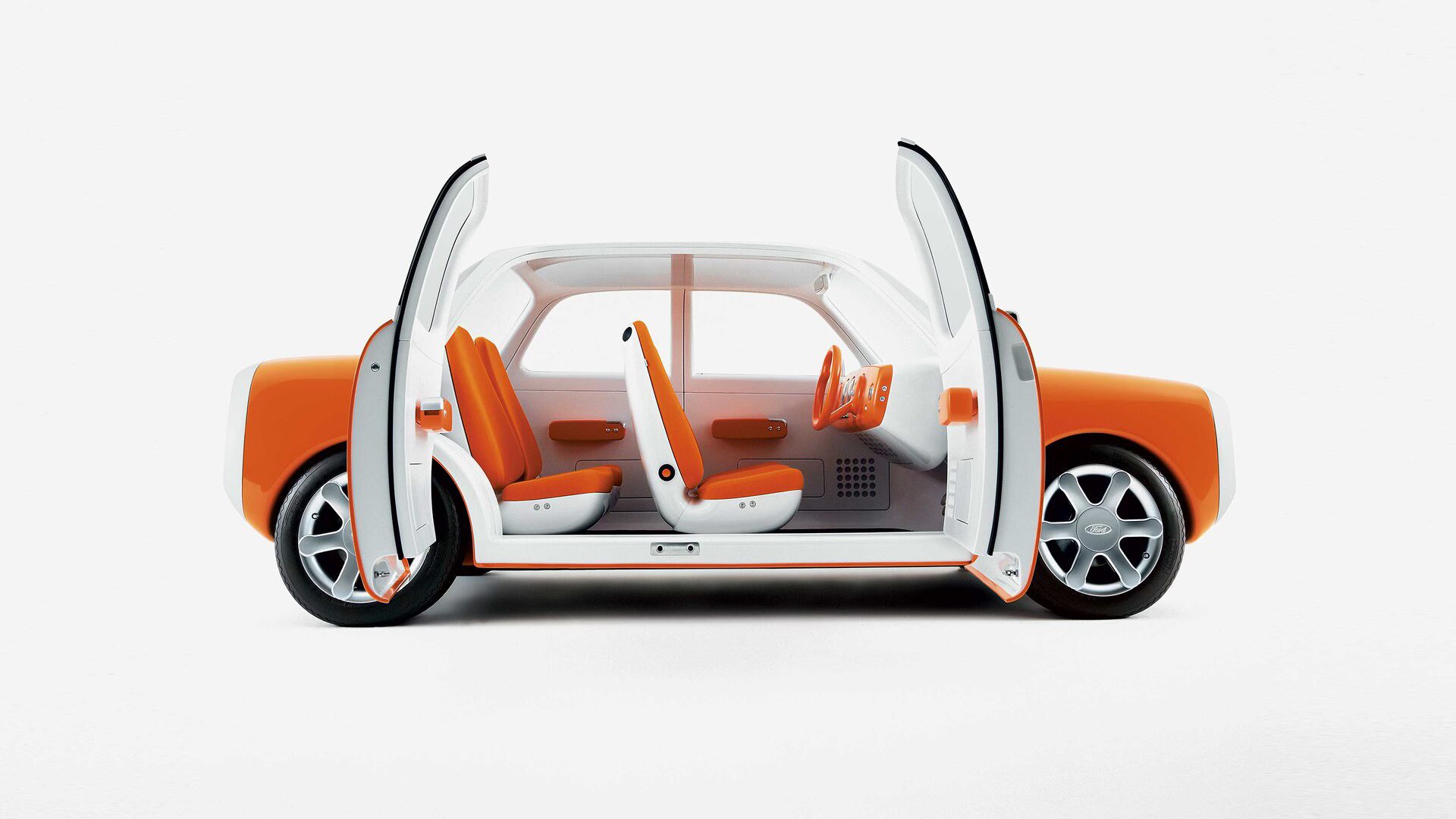
It has four doors, forward-facing seats, a steering wheel and the silhouette of a car designed to be driven. When a passenger gets in, the driver’s seat remains empty but symbolically in charge. The entire cabin points toward the person who is no longer there.
An autonomous car is a room on four wheels. So why does the room still look like a car?
There are practical answers. Safety standards, crash structures, insurance, manufacturing systems and public acceptance all favor continuity. Waymo’s current service uses vehicles derived from conventional passenger cars. Its newer Ojai vehicle moves toward a passenger-first cabin with a lower step-in height and accessibility improvements, but it remains recognizably automotive. Radical interiors are difficult to regulate and even harder to trust at speed.
The familiar form is doing transitional work. It tells the passenger that, although the intelligence has changed, the contract has not.
Technology often arrives this way. Digital books preserved pages, covers and shelves. AI entered through a blank text box because conversation made an unfamiliar computational system feel socially legible.
Interfaces are filled with objects that survived their own disappearance. The phone app still uses the curved receiver of a landline. Video is usually represented by a strip of photographic film. Saving appears as a floppy disk. To someone born after these objects disappeared, the symbols may resemble a banana, a bunk bed or a vending machine.
The misrecognition does not prevent the interface from working. A person learns that the shape means “call” without knowing what kind of phone it depicts. The symbol has become independent of its source.
This is a strange second life for skeuomorphism. Physical resemblance initially helped people understand unfamiliar digital behavior. Eventually the digital behavior became familiar enough to teach the obsolete symbol. The phone icon no longer represents a phone. It represents the memory of how calling used to look.
Waymo performs the same maneuver at architectural scale. The empty driver’s seat is a physical icon. It tells passengers, regulators and other drivers that this unfamiliar system still belongs to the category of car.
Inherited objects are not failures of imagination. They are how change negotiates permission. The first version needs to be understood before the later version can become strange. A steering wheel reassures the regulator, the manufacturer and the passenger even when none of them expects it to be touched.
But transitional forms have a habit of becoming permanent. Once infrastructure, habits and business models collect around them, the metaphor hardens. The old object begins to dictate what the new capability is allowed to become.
The car makes this especially visible. If nobody has to drive, the interior could prioritize conversation, privacy, sleep, work or entertainment. Seats could face one another. The trip could resemble a small lounge, a cinema, a meeting room or a spa. The point is not that every robotaxi should contain a conversation pit. It is that forward-facing attention is a residue of control, not an eternal passenger need.
The same question should be asked of AI products. Does intelligence naturally belong in a chat window, or is chat the steering wheel we kept because it made the system easier to approach? Does a generative tool need to produce documents and slides, or are those simply the containers organizations already know how to approve?
For teams, inherited form should be treated as a stage rather than a conclusion. Early familiarity can accelerate adoption. Later, it can suppress the behavior that made the product new.
Every emerging category therefore needs two roadmaps: one for what can be built now, and another for what the product becomes once it no longer has to explain itself through the past. The future initially arrives as an icon of the past. The question is when that icon stops helping us understand the new behavior.